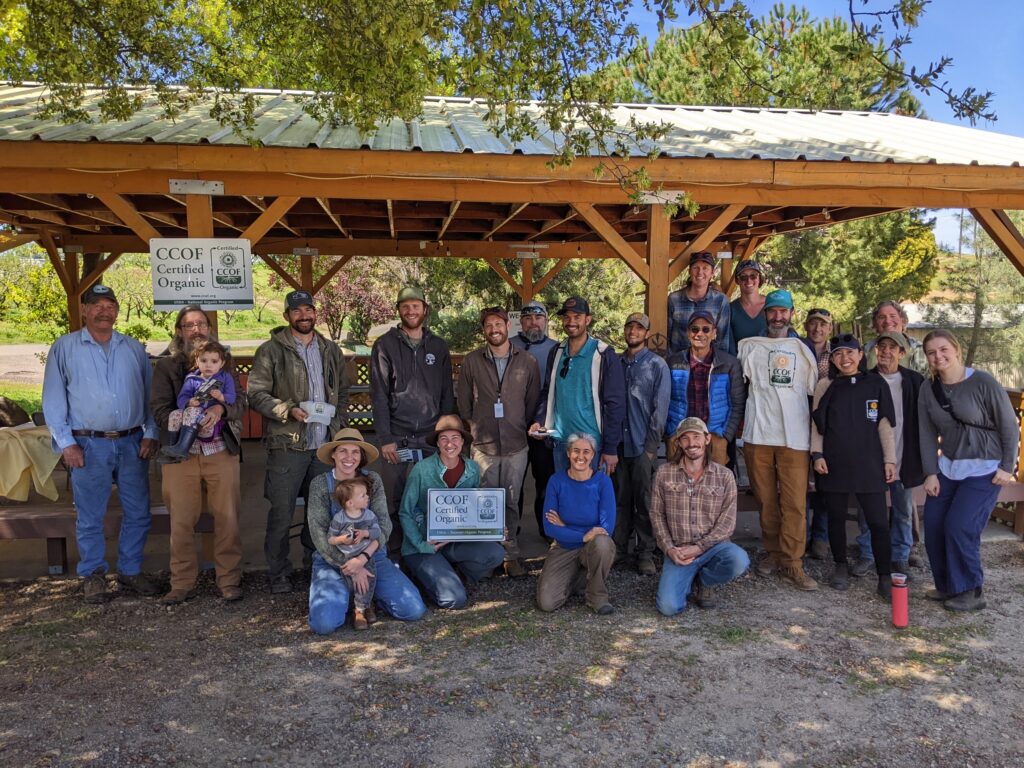
Foto de la reunión del capítulo de la Costa Central de 2024
La Junta Directiva de CCOF aprobó recientemente algunas actualizaciones al marco de gobernanza de las secciones locales de CCOF. Los miembros de CCOF deben aprobar algunos de estos cambios mediante una votación electrónica formal. En este artículo se explican los cambios, por qué se realizaron y qué, cuándo y cómo se les pedirá a los miembros de CCOF que voten sobre ellos.
Fondo
Antes de que se estableciera el Programa Nacional Orgánico (NOP) del USDA, los productores de la CCOF se organizaron en secciones que elaboraban y hacían cumplir las normas orgánicas. Cuando se estableció el NOP, esta responsabilidad pasó a manos del USDA. La CCOF conservó la sistema de capítulos como su red de base, que reúne a los productores para debatir temas relacionados con la agricultura orgánica, establecer contactos entre ellos, aprender de sus pares y fortalecer la comunidad.
Sin embargo, con el paso del tiempo, la estructura de los capítulos no se actualizó para reflejar esta evolución en su función, y la participación disminuyó. Los comentarios de los líderes de los capítulos indicaron que las responsabilidades administrativas, en particular los requisitos bancarios y operativos, se habían vuelto una carga y que los líderes deseaban más apoyo para la construcción de la comunidad, la organización de eventos y la participación de los miembros.
En respuesta a ello, la Junta Directiva, el personal y los asesores legales de CCOF llevaron a cabo una revisión del sistema de capítulos e identificaron tres áreas principales de mejora:
- La gestión de 15 cuentas bancarias distintas para cada capítulo generó confusión, errores y complejidad administrativa.
- Las secciones contaban con varios cargos de liderazgo elegidos y vacantes frecuentes, y el propósito de algunas funciones no siempre estaba claro.
- Muchos estatutos y acuerdos de las secciones estaban desactualizados, presentaban inconsistencias entre las distintas secciones o simplemente no existían.
Los objetivos de la Junta eran los siguientes:
- Aumentar la participación y el compromiso de los capítulos.
- Reducir las responsabilidades administrativas para que los líderes de los capítulos puedan enfocarse en establecer contactos, fortalecer la comunidad y comunicar las necesidades de su capítulo a CCOF.
- Asegurarse de que la administración y las operaciones de la sección cumplan con la legislación vigente y estén respaldadas por los documentos normativos vigentes.
Resumen de las actualizaciones
En agosto de 2026, el resumen de los cambios sustanciales es el siguiente:
- Reemplaza 15 cuentas bancarias separadas de las secciones por un único fondo administrado por CCOF y destinado al uso de las secciones. Cada sección puede acceder a los fondos anualmente para organizar o patrocinar eventos.
- Aclara que las secciones se definen como unidades organizativas no constituidas como personas jurídicas de la CCOF, en lugar de entidades legales independientes, y que operan bajo la supervisión, la autoridad y el control de la CCOF.
- Se exige que las secciones elijan a un representante de sección, quien se desempeña como el director asignado a esa sección en la Junta Directiva de CCOF. Las secciones también pueden elegir a un presidente de sección y establecer comités de liderazgo, pero ya no están obligadas a mantener varios cargos directivos, como los de vicepresidente, secretario y tesorero.
- Solo exige registros formales para las elecciones, las votaciones y las transacciones financieras, y ya no exige la celebración de una asamblea anual formal ni la redacción de actas de la misma.
La Junta Directiva también aprobó una nueva plantilla para el Acuerdo de Capítulo y los Estatutos del Capítulo que refleja estos cambios. Estos documentos específicos de cada capítulo definen la relación entre CCOF y los capítulos individuales. Los miembros de cada capítulo votarán para aprobar estos nuevos documentos para su respectivo capítulo.
Próximos pasos
Se pedirá a los miembros que voten sobre el Acuerdo del Capítulo y los Estatutos del Capítulo propuestos durante la próxima elección ordinaria de su capítulo. Las elecciones de los capítulos se llevan a cabo cada tres años.
Los documentos propuestos están disponibles para su revisión previa solicitud. Se invita a los miembros que deseen obtener copias de los documentos propuestos o que tengan preguntas sobre los cambios a que se pongan en contacto con Laetitia Benador en Lbenador@ccof.org.
Votación de las secciones en 2026
- Humboldt–Trinity–Mendocino
- Costa Sur
- Costa Norte
- Yolo
- Sierra de Oro
Votación de las secciones en 2027
- Costa central
- México
- Valle Grande
- Kern
Votación de las secciones en 2028
- At-Large
- Fresno-Tulare
- Manejador/Procesador
- Suroeste del Pacífico
- San Luis Obispo
- Valle Norte